
By: PrintableKanjiEmblem
Times Read: 753
Likes: 0 Dislikes: 0
Topic: Science
Introduction: A Scientist Who Challenged Convention
Thomas Gold (1905‑1993) was a towering figure in 20th‑century astronomy and astrophysics. Born in Vienna and later working at the University of California, Berkeley, Gold made seminal contributions to the theory of the formation of stars, the nature of interstellar dust, and the physics of stellar interiors. Yet, beyond his work in the heavens, Gold turned his gaze toward one of Earth’s most precious resources: petroleum.
Gold’s most controversial idea was that much of the oil and natural gas found in the world’s basins does not arise from ancient organic matter buried in sedimentary layers, but instead is generated deep inside the Earth from simple chemical processes that convert abundant crustal materials into hydrocarbons. This abiotic oil hypothesis (often called the Gold hypothesis) has sparked debate, controversy, and, for many, a hopeful vision of a new, long‑lived energy future.
Gold’s Scientific Path and the Genesis of His Theory
Gold’s career was defined by curiosity and a willingness to question entrenched paradigms:
| Period | Key Work | Impact on Oil Theory |
|---|---|---|
| 1940s | Development of the “radiative heat transfer” model of stellar interiors | Demonstrated how energy could be generated from non‑organic processes |
| 1950s | Research on interstellar molecular clouds | Suggested that complex molecules can form in harsh environments |
| 1960s | “The Origin of the Petroleum” (1964) | Proposed that hydrocarbons are formed by a geochemical process involving magnesium and water deep in the Earth |
| 1970s‑80s | Lectures on deep‑Earth processes | Advocated for a “deep‑source” origin of oil, linking it to the same physics that power stars |
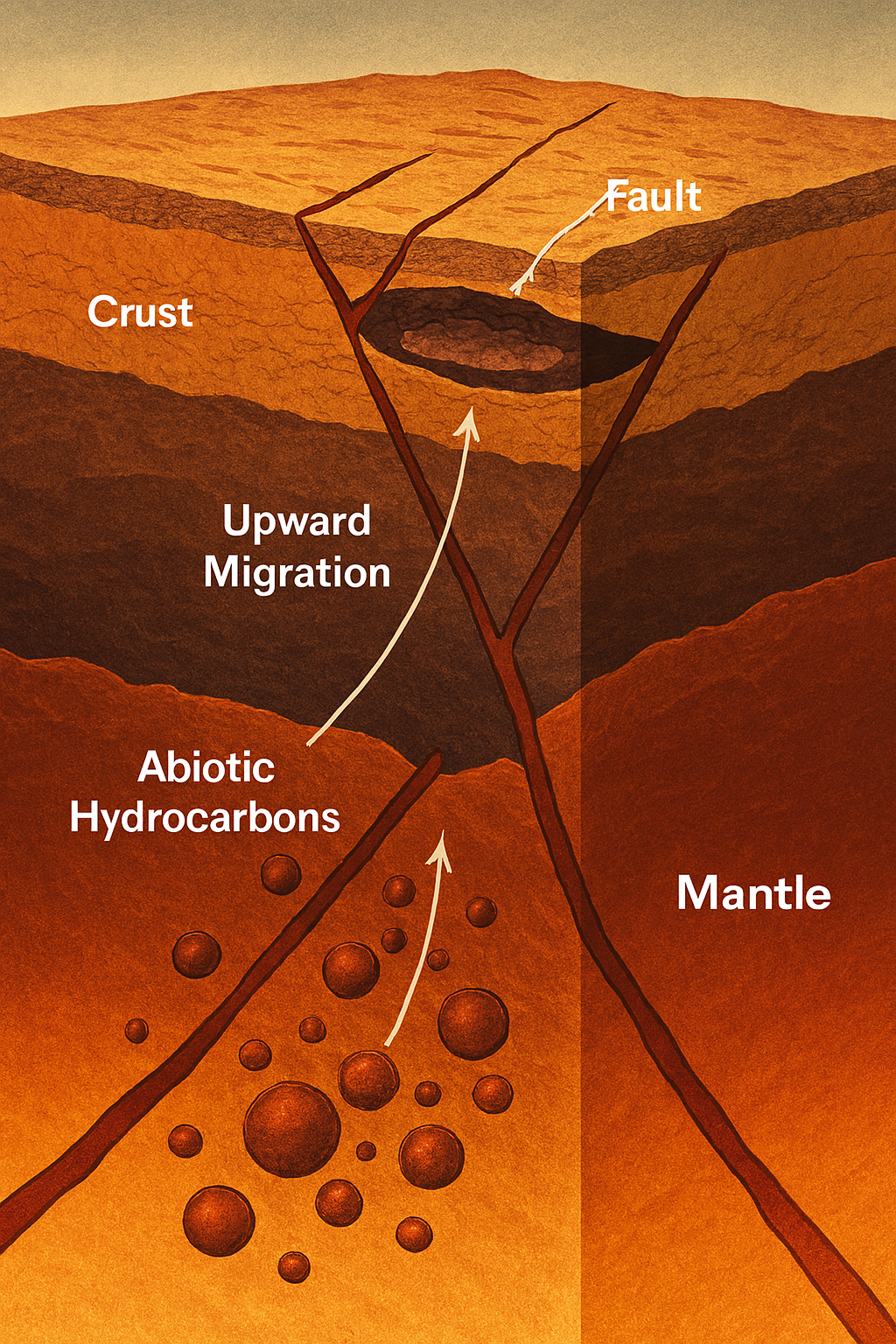
Gold’s central argument was that the Earth's core, with its extreme pressure and temperature, can provide the right conditions for the transformation of simple carbon‑bearing minerals into hydrocarbons. He postulated that:
1. Hydrogen and carbon abundant in the mantle combine under high pressure to produce methane (CH₄) and heavier hydrocarbons.
2. These gases then migrate upward, dissolving into crustal rocks or forming accumulations that later become conventional oil and gas reservoirs.
3. The process is ongoing, meaning that oil is not a finite resource but a continuous, renewable output from Earth’s interior.
The Evidence – Why Some Scientists See Plausibility
Deep‑Earth Hydrocarbon Reservoirs
Recent drilling projects in remote regions (e.g., the Arctic, deep oceanic basins, and remote continental interiors) have uncovered hydrocarbons at depths far exceeding the conventional “source rock” model. In some cases, methane has been found in mantle‑derived rocks, hinting that deep‑Earth processes can produce hydrocarbons.
Isotopic Signatures
The isotopic composition (ratio of carbon‑13 to carbon‑12) of some deep‑origin hydrocarbons differs from that of organic‑derived oils. Certain deep‑water oil fields have exhibited isotopic ratios that align more closely with abiotic sources, a result that supports Gold’s theory.
Laboratory Experiments
High‑pressure, high‑temperature laboratory experiments have demonstrated that hydrocarbon synthesis is possible from simple materials under conditions similar to those found at depths of 40–60 km. These experiments show that methane and even heavier hydrocarbons can form from reactions between water, magnesium silicates, and trace amounts of iron.
Geophysical Observations
Seismic studies have revealed zones of low seismic velocity within the upper mantle that may correlate with zones of high fluid content, possibly methane or other hydrocarbons. This suggests that the mantle might act as a reservoir for these gases.
The Optimistic View: A Renewable, Clean, and Abundant Energy Future
From an optimistic standpoint, Gold’s hypothesis holds several attractive promises:
| Aspect | Potential Impact |
|---|---|
| Renewability | If oil is continually generated by Earth’s interior, it could provide a near‑infinite supply, dramatically reducing concerns over resource depletion. |
| Sustainability | Deep‑Earth hydrocarbon generation is powered by the planet’s own heat, meaning that extraction would not rely on finite surface resources. |
| Reduced Environmental Footprint | A deeper source may lessen the environmental impacts associated with surface mining, as the hydrocarbons would be extracted from stable, protected reservoirs. |
| Geopolitical Stability | Regions currently lacking oil reserves could access new sources, potentially decreasing geopolitical tensions and dependence on oil‑rich nations. |
| Technological Innovation | New drilling technologies (e.g., ultra‑deep drilling, enhanced geophysical imaging) would advance the broader field of Earth sciences and engineering. |
If the abiotic oil hypothesis proves correct, the world could potentially shift from a dwindling fossil‑fuel paradigm to a sustained, integrated energy strategy that leverages the planet’s own chemistry.
Counterarguments and the Scientific Debate
It is important to recognize that mainstream geology largely supports the organic‑source model, which explains the vast majority of known oil reservoirs. Skeptics highlight:
- Geological age of petroleum deposits (often millions of years) aligns with organic decay timelines.
- Distribution patterns that mirror ancient sea beds and sedimentary basins.
- Economic and field data that fit the conventional source–reservoir–trap framework.
However, the optimistic perspective is not dismissing these facts; it is instead encouraging open, evidence‑driven inquiry into deep‑Earth processes. Many proponents argue that the discovery of deep hydrocarbon reservoirs indicates that abiotic processes could be complementary rather than exclusive.
Toward a Future of Integrated Exploration
For the abiotic hypothesis to gain mainstream traction, several steps are essential:
Targeted Deep‑Earth Drilling: Projects aimed at sampling mantle‑derived fluids at depths of >50 km to analyze hydrocarbon content directly.
Advanced Isotopic Analysis: High‑precision isotope measurement can discriminate between organic and abiotic origins.
Theoretical Modeling: Coupling geodynamic, thermodynamic, and geochemical models to simulate hydrocarbon generation in Earth’s interior.
Interdisciplinary Collaboration: Geophysicists, chemists, petroleum engineers, and climate scientists working together to evaluate the viability and implications of abiotic oil.
Such efforts will clarify whether the Earth’s interior can indeed sustain a renewable hydrocarbon flux at economically exploitable levels.
Conclusion: A Vision Worth Exploring
Thomas Gold’s abiotic oil hypothesis remains one of the most provocative ideas in modern Earth science. While it sits outside mainstream acceptance, the growing body of indirect evidence—from deep‑water drilling to isotopic anomalies—keeps the hypothesis alive and well. An optimistic view does not dismiss the challenges; it embraces them as opportunities to push the frontiers of geology, chemistry, and engineering.
If future research substantiates that Earth’s interior is a self‑sustaining hydrocarbon factory, the implications would be transformative: a renewable, potentially cleaner, and geopolitically stable energy source that could alleviate many of today’s pressing challenges. Even if the hypothesis turns out to be only partially correct, the pursuit will deepen our understanding of Earth’s inner workings and drive innovation across multiple scientific domains.
In the spirit of Thomas Gold’s curiosity and daring, the scientific community can look forward to a future where the mysteries of the deep are explored with rigor, imagination, and hope.